Explorco Moves Toward Onshore Drilling in Volta Basin, Testing Ghana’s Inland Petroleum Potential
After years of seismic surveys, stakeholder consultations and strategic partnerships, GNPC Explorco is preparing to drill the Volta Basin’s first modern onshore exploratory wells, marking a pivotal step in Ghana’s effort to expand petroleum exploration beyond its offshore strongholds.
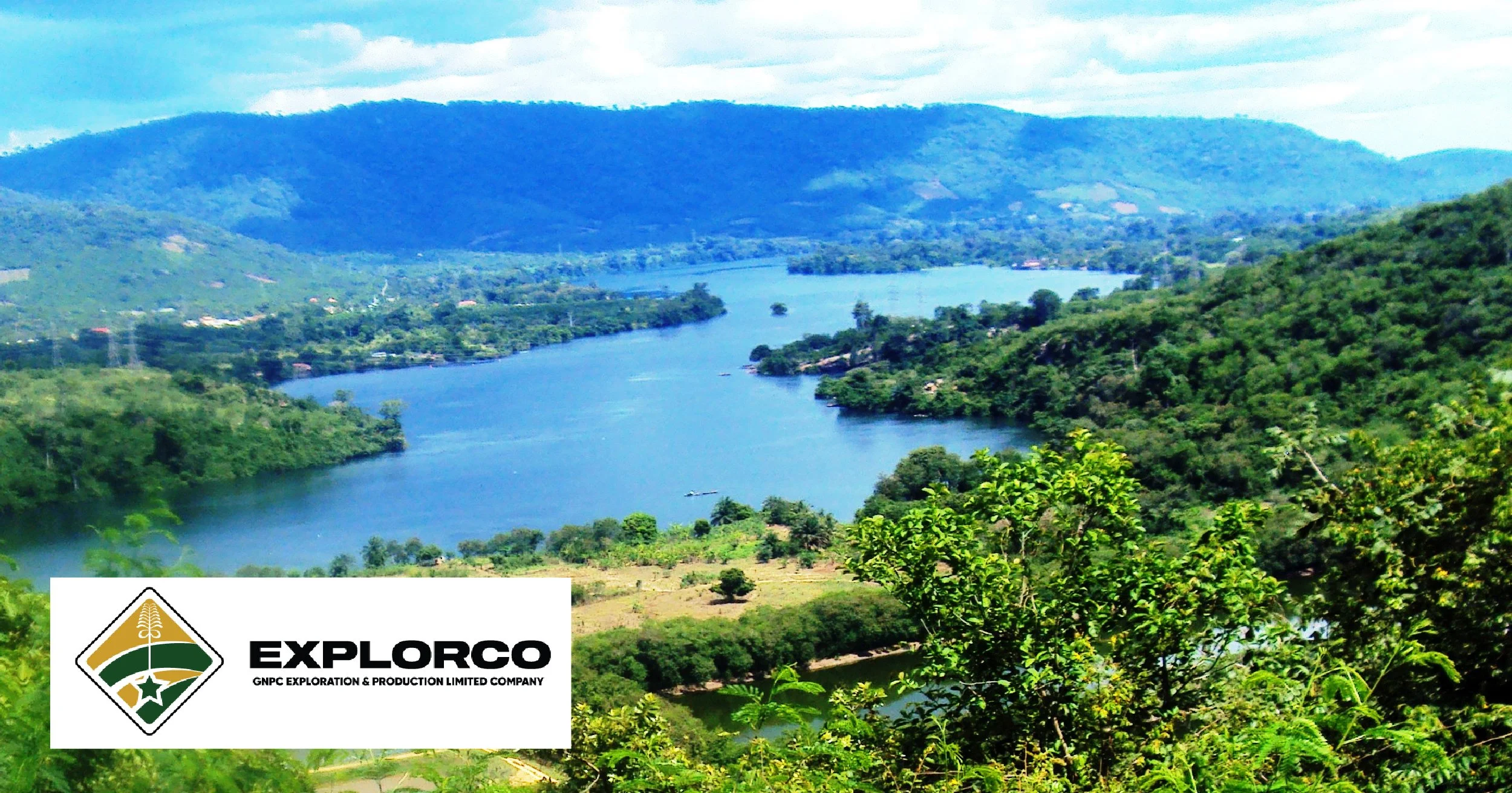
Voltaian Basin, Northern Ghana, Ghana | March 11, 2026 - Ghana’s long-gestating plans to test the petroleum potential of its vast inland sedimentary basins have entered a decisive phase.
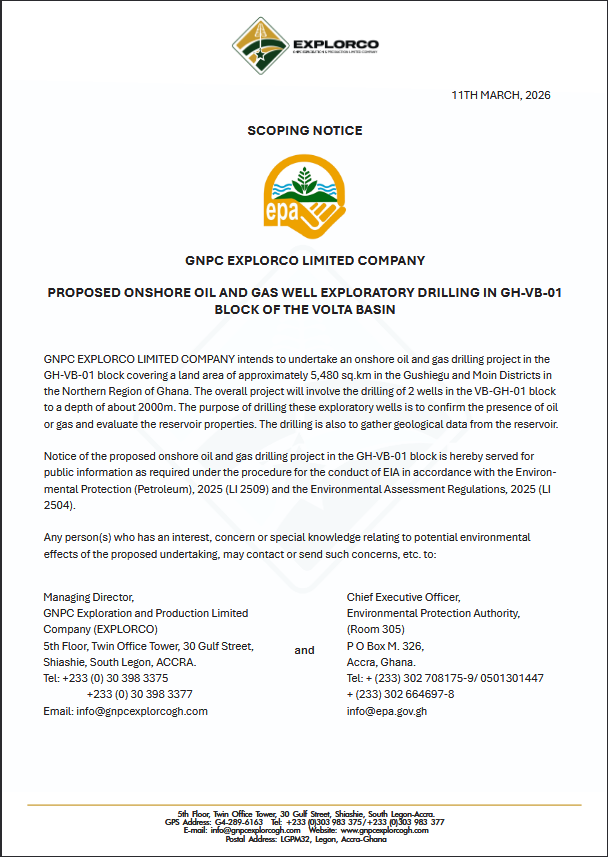
On 11 March 2026, GNPC Exploration and Production Limited (Explorco) announced the commencement of preparatory steps for onshore exploratory drilling in the GH-VB-01 block of the Volta Basin, marking the most concrete step yet toward determining whether northern Ghana holds commercially viable oil and gas deposits.
In a scoping notice issued as part of the environmental permitting process, the company disclosed plans to drill two exploratory wells to a depth of approximately 2,000 metres within a concession spanning roughly 5,480 square kilometres across the Gushiegu and Mion districts in the Northern Region.
The project, Explorco said, is intended “to confirm the presence of oil or gas and evaluate the reservoir properties,” while also enabling the company “to gather geological data from the reservoir.”
The notice forms part of the regulatory process required under Ghana’s Environmental Protection (Petroleum) Regulations, 2025 (LI 2509) and the Environmental Assessment Regulations, 2025 (LI 2504), opening a window for public consultation before drilling activities can begin.
A Strategic Push Beyond the Offshore
The drilling plans arrive at a delicate moment for Ghana’s upstream sector.
Crude production from the country’s three producing offshore fields—Jubilee, TEN and Sankofa—has slowed in recent years. Data from the Public Interest and Accountability Committee (PIAC) shows that Ghana’s crude output fell by 25.9 per cent in the first half of 2025, sharpening calls for renewed exploration activity to replenish reserves and sustain production over the long term.
The Voltaian Basin—an expansive inland geological formation covering roughly 103,600 square kilometres, or nearly 40 per cent of Ghana’s landmass—has increasingly become central to that effort.
For decades, the basin remained largely unexplored due to limited seismic data and the technical risks associated with frontier exploration. But policymakers and industry actors now see it as Ghana’s most promising untapped petroleum frontier.
Explorco, the exploration and production subsidiary of the Ghana National Petroleum Corporation (GNPC), has been leading that charge.
Building Toward the First Wells
The drilling announcement is the latest milestone in a multi-year campaign by Explorco to systematically de-risk the basin.
The groundwork began with a series of geological and seismic studies designed to better understand the basin’s subsurface structure. Those efforts intensified this year when the company announced aerial geophysical surveys across large swathes of the basin, deploying low-flying aircraft to collect gravity and magnetic data aimed at identifying potential hydrocarbon traps.
Prior to this, Explorco moved to align its technical ambitions with a broader institutional strategy. In collaboration with GNPC and advisory firm KPMG, the company unveiled a 2030 strategic roadmap focused on advancing onshore exploration as a pathway toward greater domestic energy security.
Industry partnerships followed.
Explorco entered into agreements with Lubrimax Oil Ghana Limited and Welfare Energy and Petroleum (WEP) to support logistics and operational requirements for future inland drilling campaigns—an acknowledgement that building a new petroleum province requires an ecosystem of service providers, not just geological optimism.
Stakeholders Brought Into the Fold
Equally important has been the effort to secure local buy-in in northern Ghana, where commercial petroleum operations would represent an entirely new industrial presence.
In December 2025, Explorco held a major stakeholder engagement in Tamale, bringing together traditional authorities, local government officials, civil society groups and community representatives from across the Northern Region.
The engagement sought to explain the exploration process, address environmental concerns and prepare host communities for the potential economic and social implications of petroleum development.
Such consultations are now moving into a more formal regulatory phase following the publication of the scoping notice for the GH-VB-01 drilling programme.
Under Ghana’s environmental assessment framework, individuals or institutions with “an interest, concern or special knowledge relating to potential environmental effects of the proposed undertaking” are invited to submit their views to Explorco or the Environmental Protection Authority (EPA).
Testing the Basin’s Promise
For Ghana’s petroleum sector, the stakes are high.
Success in the Volta Basin could open an entirely new chapter in the country’s energy story—diversifying exploration away from the offshore Western Basin where all current production is concentrated.
Failure, however, would underscore the risks inherent in frontier exploration.
Either way, the planned wells will provide the first definitive test of a geological hypothesis that has lingered for decades: whether the immense Voltaian Basin holds commercially viable hydrocarbons.
With drilling preparations now underway and regulatory processes in motion, Ghana’s northern frontier may soon deliver its most important geological verdict yet.
