Exclusive Interview: Restoring the Flare, Revitalizing Ghana’s Refining Backbone
Edmond Kombat Esq. - Managing Director, Tema Oil Refinery
For six long years, the flare stacks at Tema Oil Refinery stood as quiet sentinels over Ghana’s industrial coastline. The hum was gone. The towers cooled. A national asset once central to Ghana’s downstream petroleum architecture drifted toward near-sale and dormancy.
Today, the flame is visible again.
In this exclusive conversation, Managing Director Edmond Kombat Esq. speaks candidly about the refinery’s prolonged inactivity, the painstaking technical revival, and the strategic roadmap guiding its next chapter. Currently operating at approximately 28,000 barrels per stream day, below its 45,000 bpsd nameplate capacity, TOR is targeting a restoration to full capacity and a subsequent expansion to 60,000 bpsd. Beyond that lies an even more ambitious vision: a 100,000 bpsd integrated refinery and petrochemical complex designed to reposition Ghana within West Africa’s industrial value chain.

Here’s the story of the revival of this critical national asset, told from the perspective of the executive steering its restoration, recalibration and ramping-up.
PP: First and foremost, congratulations are in order, and they have been coming in from across the country and industry to the Presidency on the continental stage. How does that feel?
MD:
Thank you. It feels encouraging, and at the same time, it feels sobering.
Encouraging because TOR’s revival was not guaranteed. Many people had written the refinery off. So, when you see recognition coming from industry players, regulators, the presidency, and even continental platforms, you appreciate that the effort is being acknowledged.
However, sobering because congratulations can sometimes create the impression that the work is finished. And in refining, the work is never finished.
Truth is, if people are clapping today, it means expectations have risen for tomorrow’s performance.
So yes, we are grateful. We appreciate the confidence. We appreciate the recognition. But the real satisfaction will not come from applause. It will come from sustained safe operations, stable throughput, and consistent performance over time.
Revival is an important milestone. Sustainability is the real achievement.
1. Historical Context & Inactivity
PP: TOR was inactive for six years. Some questioned whether it would ever return. What led to that prolonged dormancy?
MD:
Refining is not forgiving. If maintenance is deferred, if financing tightens, or if commercial structures become unstable, the refinery might as well be as good as gone. The consequences are immediate, and they are national.
So, what happened? The situation resulted from a combination of accumulated technical degradation, constrained working capital, and difficult market conditions.
As to whether it was deliberate, well, let’s just say, no serious institution deliberately shuts down a strategic asset. But when maintenance, governance, and commercial predictability are not moving together, dormancy can become the unintended result. Now, it is crucial to break the cycle and make the flame visible.
PP: To what extent were internal management challenges, policy direction, or market forces responsible?
MD:
It would be convenient to blame one factor, but refining performance rests on three pillars: asset integrity, policy clarity, and commercial economics.
If one weakens, you adjust. If two weaken, you struggle. If all three are misaligned, you are in difficulty.
Rather than debate percentages of blame, we focused on alignment. We started with the fundamentals. Fix the plant. Restore technical integrity. Strengthen governance. Then stabilize the commercial structure. We took a good look at how the refinery was run and put measures in place to ensure governance oversight is tighter. Commercial arrangements are being structured more prudently as we speak; we intend to scale up our operations, after all.
Our objective is to build stability across all fronts, and that’s precisely what we are doing at the moment.
PP: Were there missed opportunities under the previous administration?
MD:
You see, hindsight always offers perfect vision. It is easy to look back and say, “This could have been done differently.”
However, as Managing Director, my responsibility is not to comment extensively on past administrative decisions. That chapter is documented. My focus is on ensuring that maintenance is never deferred again, that accountability frameworks are clear, and that performance reporting is consistent.
Let us just say this: lessons have been learned, and those lessons are now institutional policy.
2. Revival and Operational Restart
PP: What was the most difficult technical hurdle in restarting TOR?
MD:
With the urgency that TOR’s revival demanded, patience was by far the biggest hurdle.
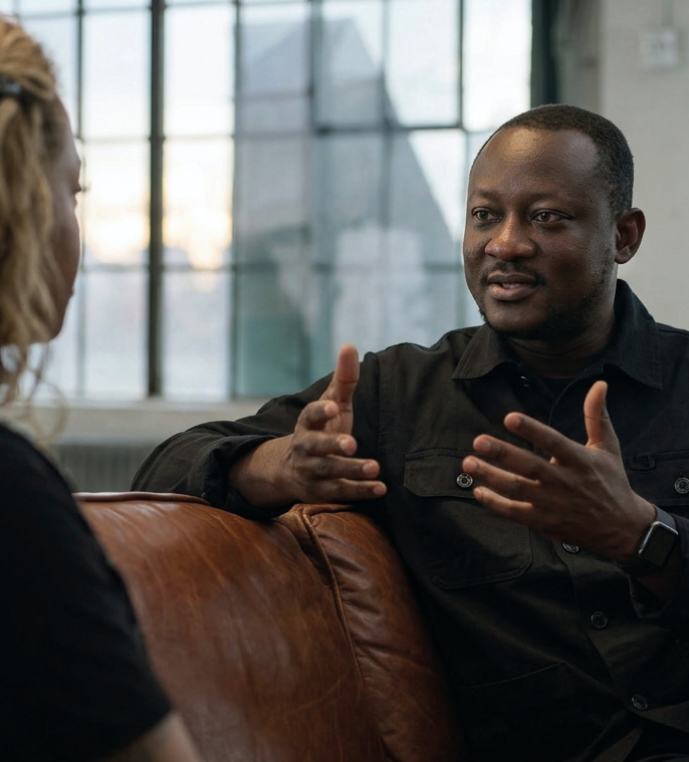
You don’t just restart a refinery after extended inactivity. It’s not like commissioning a project with a ceremonial switch-on. Restarting the refinery after such an extended time requires stabilizing utilities, ensure that key equipment like boilers is functional, calibrating instrumentation and comprehensively testing safety systems.
With these in mind, we conducted major Turnaround Maintenance (TAM) on the Crude Distillation Unit between August and October 2025. The National Petroleum Authority (NPA) inspected thoroughly and granted clearance. We resumed refining on December 19, 2025 in a phased manner at approximately 28,000 barrels per stream day. Our aim at the time was to ensure the operations of the refinery ran in a stable manner. This next phase of the refinery’s evolution involves increasing our capacity.
PP: How did you navigate financial and logistical constraints?
MD:
That dimension highlighted the value of inter-agency coordination between the government, our regulators, our engineering teams, finance and logistics departments. Ordinarily, these tasks would be herculean, but there was a common vision to see the refinery back in operation, and with that in mind, and a lot of patience, everyone moved in alignment and contributed in managing the obstacles such that the revival became a reality.
That inter-agency coordination is one of the quiet strengths of this revival.
3. Capacity Expansion & Strategic Plans
PP: Why go beyond 45,000 barrels per stream day to 60,000?
MD:
The F-61 furnace installation enables restoration to our 45,000 bpsd, nameplate capacity. Beyond that, the installation of an Air-Cooler creates a pathway to 60,000 barrels per stream day.
Why expand? Because energy security is not static. Ghana’s demand profile is evolving and refining locally reduces foreign exchange pressure and strengthens supply resilience.
Now, will we announce timelines casually? No. Expansion must follow stability, because we understand, from past experience, that scaling responsibly is the right and proper thing to do.
PP: There is also mention of a 100,000 barrels per day refinery and petrochemical complex. Is that concrete?
MD:
Let me explain it this way. A refinery that only thinks about immediate survival will always be reactive. A refinery that thinks twenty to thirty years ahead begins to design the industrial ecosystem around it.
The proposed 100,000 bpsd is envisioned as a greenfield development, separate from the existing plant, structured to integrate refining with petrochemical processing. That is important, because the future of refining globally is not just fuels. It is value addition through petrochemicals, industrial feedstocks, and downstream manufacturing inputs.
Now, does that mean we wake up tomorrow and start construction? No. First, stabilize and optimize the current refinery. Second, restore and expand to 60,000 barrels per stream day responsibly. Third, use that operational stability as the foundation upon which larger-scale industrial integration can stand.
The greenfield facility represents the next phase of Ghana’s refining evolution, but it must be driven by feasibility studies, structured financing, credible partnerships, and feedstock security.
When those elements are fully aligned, formal announcements regarding development timelines and structure will be communicated in due course.
We are being very deliberate in how we plan. From experience, we know that real industrial transformation does not happen overnight. It takes practical steps and patience. hed in a framework of practicality and patience.
4. Governance, Accountability & Oversight
PP: The point has been made about governance lapses contributed to past challenges. What has changed?
MD:
In one word: Systems. We are moving from personality-driven management to system-driven management.
We are implementing predictable maintenance planning, structured KPIs, procurement controls and ERP in Finance, Payroll, and HR. Paper-based processes have ceased in these departments.
Dormancy does not happen suddenly. It builds gradually when discipline slips. We are institutionalizing discipline to ensure the operation works on a sound basis and continuously.
5. Market Position & Competitive Landscape
PP: Ghana’s downstream space is competitive. How does TOR compete?
MD:
We compete by doing what we are tasked with doing: performing. If TOR produces efficiently, meets specification standards, manages cost discipline, and sustains reliability, it earns relevance. We are not seeking special protection. We are building operational credibility.
A functioning national refinery strengthens the entire downstream ecosystem, and that is precisely what we are here to ensure.
6. National Impact & Vision
PP: What does TOR’s revival mean for Ghana?
MD:
It contributes immensely to energy security. It reduces foreign exchange exposure, secures over 1,100 direct jobs and further reinforces Ghana’s refining base. More importantly, it remains central to ensuring Ghana’s energy stability.
PP: Your message to Ghanaians?
MD:
We understand that when TOR runs well, it directly affects fuel availability, pricing stability, and ultimately the everyday life of Ghanaians. Energy security is not an abstract concept. It impacts transport, industry, and households across the country. So, our commitment is simple: to operate safely steadily, and consistently. That is how we intend to serve citizens and contribute meaningfully to Ghana’s energy stability.
PP: Thank you very much for your time, Sir.
MD:
Thank you. It has been a pleasure.
