
The Stranded Sun: Why Ghana’s Green Engine is Choking on 20th-Century Wires
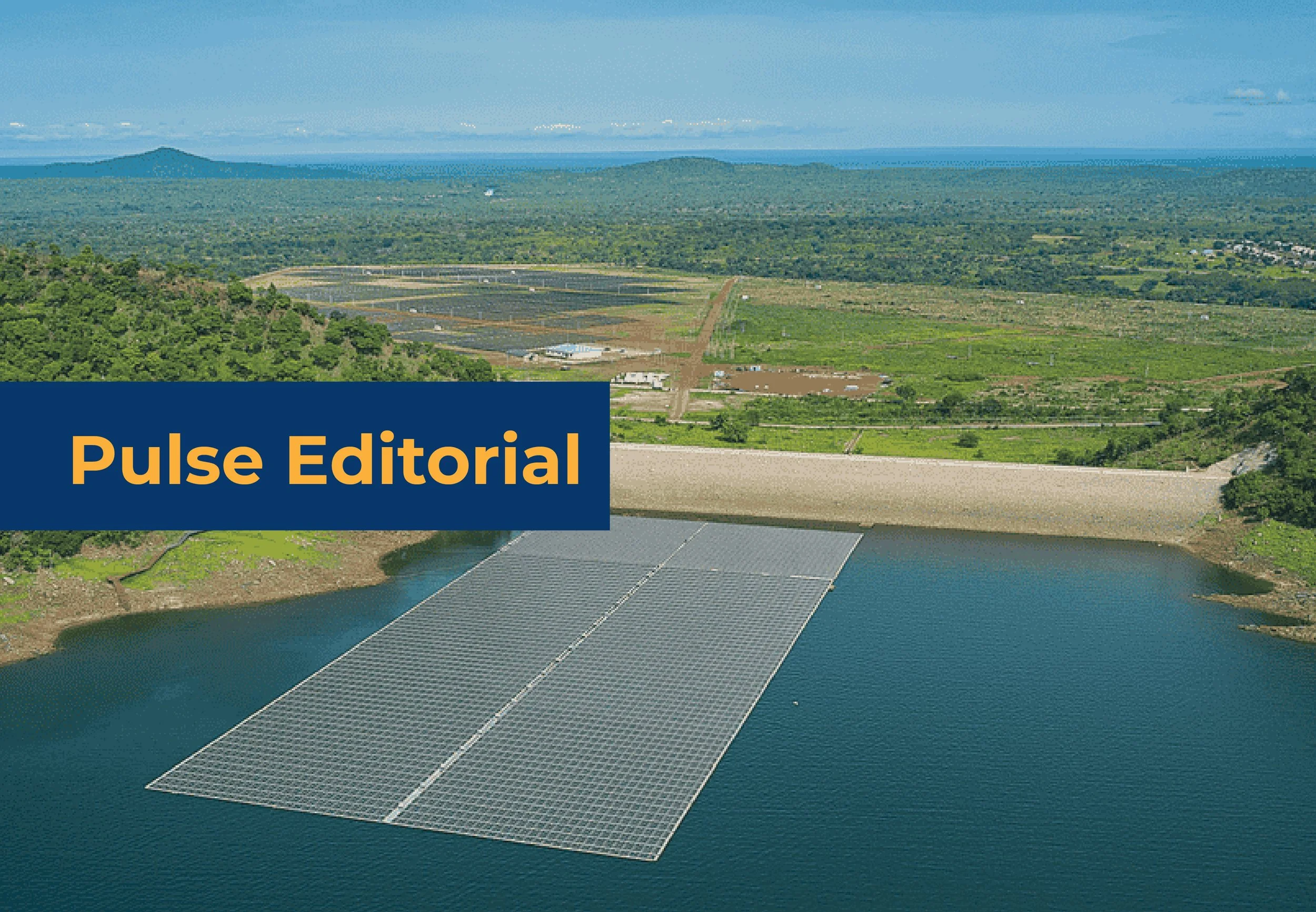
Photo Credit: Buipower.com
Floating solar panels gleam atop the Bui reservoir, 50 megawatts of clean electricity ready to surge into the grid. Midday sunlight strikes every photovoltaic cell, yet much of that energy does not reach homes or factories. Downstream, a substation in Kumasi hums and strains, transformers overheating, lines sagging under the load. The panels sparkle with promise, but the grid which is the veins of Ghana’s power system is clogged. Policymakers speak of megawatts and emission targets, but the real story sits in silent transformers, overloaded substations, and smart meters that cannot collect what is owed. Ghana is building a 21st-century engine but trying to run it through a 20th-century exhaust pipe.
The grid is the circulatory system, and substations are its narrowed arteries. The country installed nearly 5,740 megawatts of generation against peak demand of roughly 4,073 megawatts, yet bottlenecks persist. The National Interconnected Transmission System could theoretically handle more solar PV injection yet actual capacity is limited by aging infrastructure and zonal constraints. The Bui plant doubled Ghana’s grid-connected solar capacity, with a 250MWp solar future projection. In practice, solar output is curtailed because transmission lines cannot evacuate electrons to underserved regions or power-hungry industries. Analysis of Installed capacity, peak demand and reliable grid Injection capacity will show that more power alone is meaningless; better wires are what matter. Substations at Kumasi, Smelter II, and Anwomaso operate near thermal limits. Mapping these as Hot Zones would visualize the narrowed arteries metaphor and the physical wall that constrains Ghana’s energy transition.
Digital intelligence lags behind generation. Intermittent solar and wind require precise monitoring and rapid dispatch. SCADA upgrades and phasor measurement units have been installed, yet full automation remains a medium-term goal. Voltage fluctuations force curtailment of renewable energy despite ample generation. The digital gap slows the flow of electrons and magnifies the strain on physical infrastructure. An overlay of the SCADA and PMU network on the transmission map would clarify where the grid has eyes and where it remains blind, highlighting the invisible barrier between potential and delivery.

If the grid is the circulatory system, the Electricity Company of Ghana is a leaking heart. In 2024, technical and commercial losses hit 32%, the highest in two decades. For every three units of electricity purchased, one is lost to theft, billing errors, or inefficiencies.
The energy sector shortfall persists, and is projected to reach US$1.10 billion in 2026.GRIDCo’s billion-dollar transmission upgrade simply cannot proceed without reliable revenue. Floating solar arrays and wind turbines remain stranded potential in a financial vacuum. Cost-reflective tariffs and disciplined revenue collection are not abstract ideals and are the foundation that enables electrons to move from sun to socket.
The human and systemic stakes are clear. Ghana’s experience is instructive for the global south. Policymakers are drawn to the glamour of generation: solar farms glinting on reservoirs, turbines slicing the sky. Yet the revolution occurs in the unglamorous middle: copper in high-voltage lines, SCADA logic, functioning billing systems. Without these, the sun will continue to shine on idle panels.
The lesson extends far beyond Accra or Kumasi: energy transitions are fundamentally about building networks capable of delivering power, not merely creating it. Kenya and Ethiopia’s infrastructure-first approach demonstrates the dividends of prioritizing wires before watts , showing that a green engine without modern arteries cannot accelerate the clean energy future.
The way forward requires a shift in capital expenditure (CAPEX) from generation assets to distribution intelligence and revenue recovery systems."