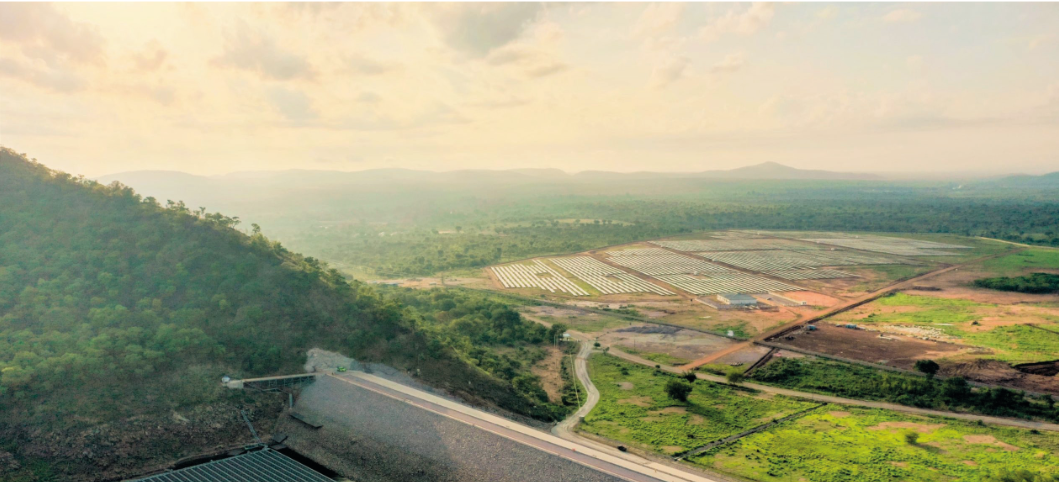
SnooCODE’s New Lens on Rooftops: Turning Solar-Ready Space into Bankable Energy Capacity
Ghana’s electricity story has long been shaped by thermal power plants—reliable workhorses that convert petroleum-derived fuels into megawatts. When hydropower output dips, demand rises, or grid constraints tighten, thermal generation often becomes the stabilizing backbone. But that stability comes with a familiar set of trade-offs: exposure to global fuel-price swings, foreign exchange pressure, logistics and supply-chain risks, and higher marginal generation costs that ultimately ripple through households, businesses, and industry.
At the same time, Ghana is facing a new kind of demand growth. Urbanization is accelerating. Digital services and modern businesses need stable power all day. Cooling needs are rising. And electric mobility is no longer theoretical—electric vehicles and charging infrastructure will add new pressure to an already constrained system. The result is a widening gap between what the grid can comfortably supply and what the economy increasingly needs.
Renewable energy—especially solar—has shifted from “nice-to-have” to practical necessity. Solar is modular, fast to deploy, increasingly cost-competitive, and well-suited to distributed generation. Yet the biggest barrier to scaling solar microgrids across neighborhoods, districts, and regions isn’t just financing or equipment availability. It’s planning: identifying where the usable space actually is, how much solar can realistically be installed, and how to deploy it without displacing valuable land or “hijacking” spaces meant for housing, commerce, agriculture, or public services.
That is exactly where data and novel approaches change the game.
A New Lens on Rooftops: SnooCODE is Measuring Solar-Ready Roof Area
In pioneering work done by SnooCODE, we now have a data-driven system that can estimate roofing space—at the scale of a neighborhood, community, district, region, or even entire countries. This is all without expensive and lengthy surveys.
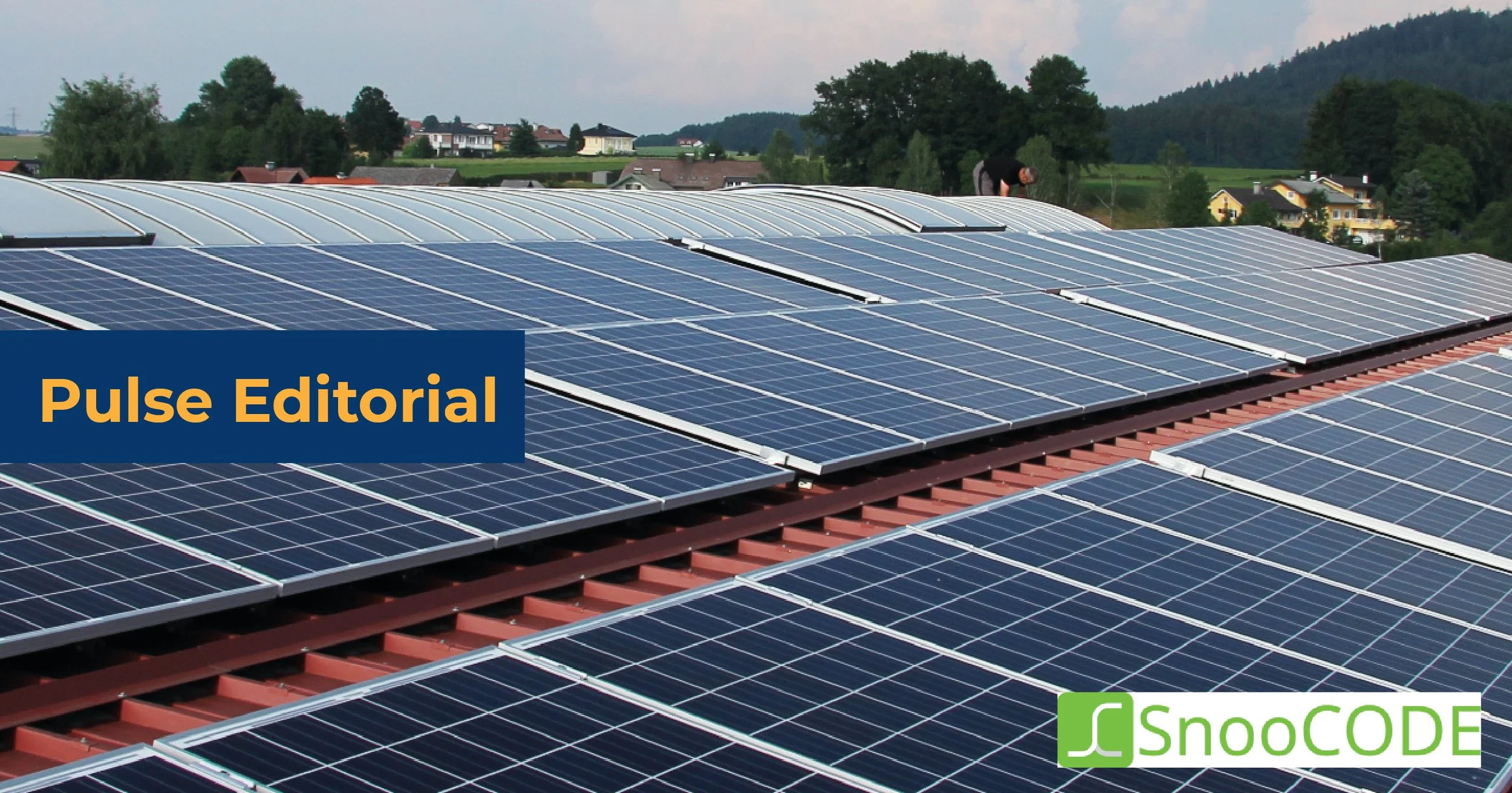
Beyond simply measuring roof area, the system estimates how much of that roofing is suitable for solar panel installation. This matters because “roof area” and “solar-ready roof area” are not the same. Real-world constraints—roof geometry, shading, orientation, obstructions, and structural considerations—affect what can be deployed effectively.
SnooCODE’s tools reduce uncertainty and turn rooftops into measurable, bankable potential, without sacrificing ground space.
The outcome is a clearer picture of how much distributed solar capacity can be installed on existing built surfaces, rather than consuming scarce ground space. This approach reduces land-use conflicts and speeds up decision-making for microgrid developers, utilities, municipalities, and private investors.
These are just a few of the technical capabilities developed by the team of engineers and data scientists at SnooCODE, where valuable insights can be gleaned for planning, resource governance, energy needs, and much more. For example, they have been able to count the structures in entire countries, information that can now be used to assess property rates, valuation, and provide realistic household estimates.
Ghana, the “Best” Country in the World for Solar Microgrids
Every weekday, the power consumption needs of Ghanaians follow a similar pattern. Increasing from about 5am, plateauing during working hours (about 9am to 5pm), and then peaking from about 6pm to 9pm. With this predictable pattern and lots of sunshine in the 12 months of the year, solar becomes a natural remedy.
Microgrids, localized energy systems that can operate with or without the main grid, are particularly relevant for Ghana’s evolving energy needs. They can be designed to supply:
● Facilities and commercial clusters (markets, industrial estates, hospitals, data-related infrastructure)
● New housing developments that outpace grid reinforcement
● Critical services where reliability is non-negotiable
● Electric vehicle charging stations, which need high power and predictable uptime
When microgrids draw heavily from rooftop solar, they reduce peak pressure on the national grid. At about 6pm when the national grid begins to experience the most pressure, solar systems will be charged and ready to take the pressure off.
They can also lower the delivered cost of electricity in areas where grid upgrades are slow or expensive. And importantly, they can be deployed incrementally—community by community—without waiting for large-scale generation projects and long transmission timelines.
Solar is Now Good Business, Even Without the Climate Argument
Every country needs energy, and now, even for those indifferent to climate issues, the case for solar is becoming hard to ignore. As global solar manufacturing has scaled, especially through China’s massive production capacity, the cost of panels has fallen dramatically, pushing solar from “idealistic” to “obviously economical”.
We can make the case for solar microgrids from four practical viewpoints:
Economic: Solar increasingly offers cheaper electricity over time, with less exposure to recurring fuel costs. It also supports local job creation—installation, maintenance, monitoring, and energy services—strengthening job security beyond fuel-based value chains.
Energy security: Oil markets remain vulnerable to price spikes, geopolitical tension, and disruptions (including conflict around oil and instability affecting major suppliers). Solar reduces dependence on imported fuel and lowers risk from foreign exchange pressure and supply-chain shocks.
Environmental benefits: Cleaner power improves air quality and reduces emissions—important benefits, but not the only reason solar makes sense.
Resilience: Countries are increasingly forced to plan for uncertainty on their own. Changing global priorities and the US withdrawing from climate and energy-related agreements mean countries must increasingly rely on their own energy systems and forward thinking. Distributed solar microgrids provide practical resilience: more local generation, more redundancy, and less single-point failure risk compared to centralized systems.
Bottom line: Even without emphasizing environmental advocacy, the economic, energy security, and resilience arguments alone make a compelling case for solar energy. Quite simply, solar is not just clean business, it is good business.
Why This Should Matter to the Petrochemical Industry
At first glance, solar microgrids sound like competition to petroleum-based generation. But the more strategic view is that they represent an industry-wide shift in how energy value is created and captured. For petrochemical stakeholders, the choice is not whether the transition happens, but whether they participate in shaping it.
There are three big reasons this conversation belongs in petrochemical boardrooms:
Thermal plants are becoming a balancing asset, not the default solution.
As solar penetration rises, thermal generation increasingly plays the role of firming and backup—covering evenings, seasonal dips, and contingencies. That can reduce run-hours and alter fuel demand patterns. Planning for that reality early protects asset value.Energy demand is growing—even if the fuel mix changes.
EV charging, industrial expansion, and urban services will expand overall electricity consumption. Petrochemical companies can either watch demand growth move elsewhere—or help supply the infrastructure and services that make modern energy systems work.The winning players will own intelligence, not just molecules.
Data, site selection, and optimized deployment determine whether distributed energy projects succeed. The ability to evaluate rooftop potential at scale becomes a competitive advantage—particularly when deciding where to invest, where to partner, and how to price energy services.
For the petrochemical industry, the message is clear: the future energy market will reward companies that combine dependable supply with intelligent deployment. Data-driven solar microgrids are not just an alternative—they are a blueprint for how Ghana can grow power capacity faster, cheaper, and with less risk. And for industries built on energy, participating early is not a concession. It’s a strategy.