
BOST Margin must be Retained: IES Position
PetroPulse publishes below the full statement issued by the Institute for Energy Security (IES).
The text appears exactly as released.
Source: Institute for Energy Security (IES) | Date Issued: April 12, 2026
FULL TEXT – ORIGINAL RELEASE
PRESS STATEMENT
FOR IMMEDIATE RELEASE
12/04/2026
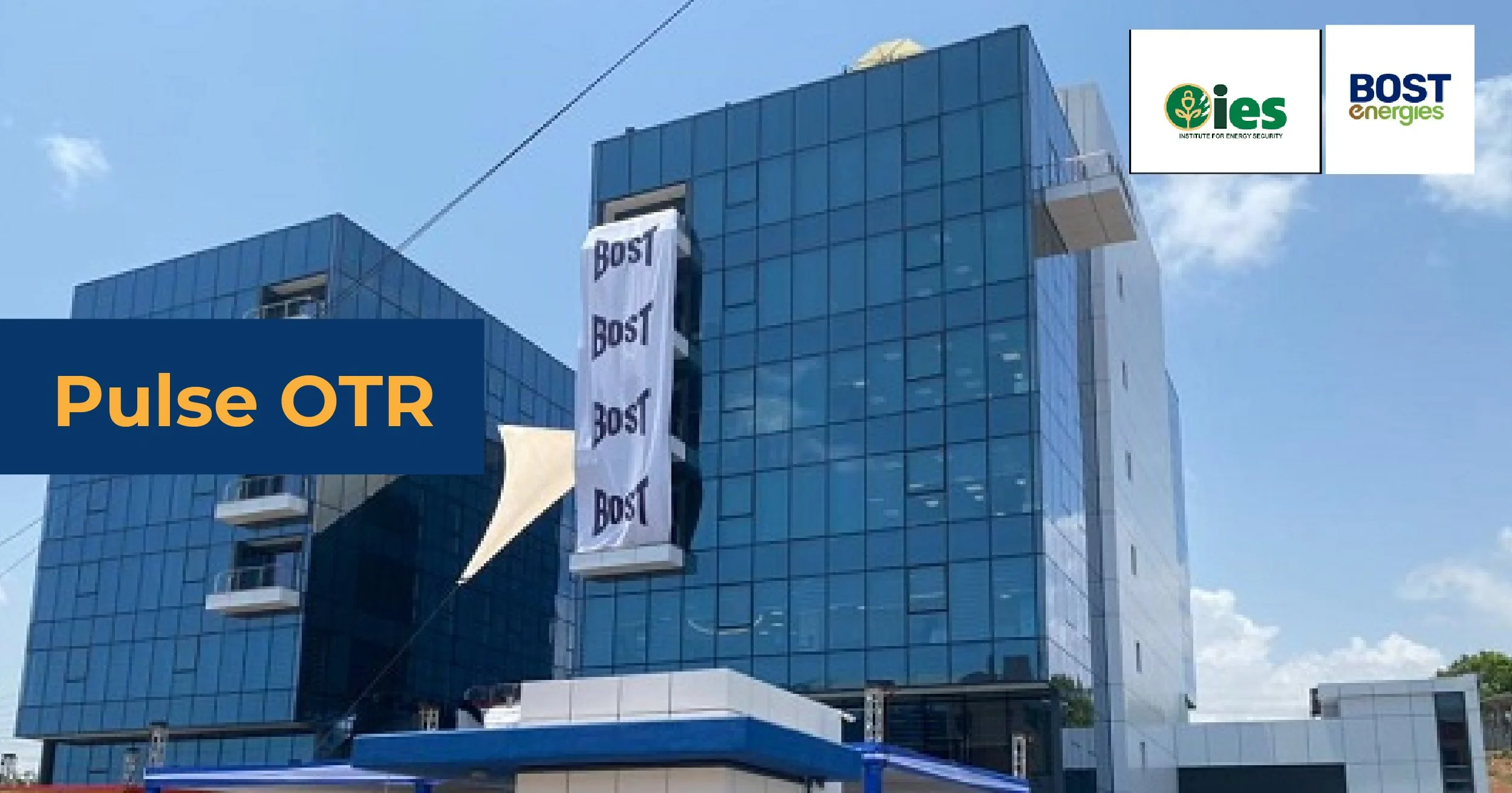
BOST Margin must be Retained: IES Position
The Institute for Energy Security (IES) strongly cautions against any move to remove the Bulk Oil Storage and Transportation (BOST) margin, emphasizing that such a decision would significantly undermine Ghana's fuel supply security and derail critical infrastructure expansion efforts.
The BOST margin remains a strategic financing mechanism that supports the development, maintenance, and expansion of petroleum storage and distribution infrastructure across the country. Its removal, particularly under current market conditions, risks weakening the operational capacity of BOST and compromising the reliability of fuel supply nationwide.
Over the past two decades, Ghana's national fuel consumption has grown substantially, driven by economic expansion, urbanization, and increased transport demand. However, infrastructure expansion especially in the middle and northern belts has not kept pace with this rising demand. This imbalance continues to expose these regions to supply vulnerabilities, higher distribution costs among others.
IES notes that BOST plays a pivotal role in maintaining strategic fuel reserves, supporting bulk storage capacity, and enhancing supply stability across the country.
Removing the BOST margin at this critical time will therefore stall ongoing and planned infrastructure projects, reduce investment capacity in storage and logistics as well as increase supply risks, particularly in underserved regions. While acknowledging the need for short-term consumer relief measures, IES stresses that dismantling key structural financing tools such as the BOST margin will create long-term systemic risks that far outweigh immediate benefits.
IES strongly recommends that, the BOST margin should be retained and protected as a strategic industry mechanism. Government should explore alternative targeted relief measures that do not undermine critical infrastructure funding such as temporarily suspending the Price Stabilisation and Recovery Levy (PSRL), allowing cross-pricing flexibility between PMS and AGO, and marginally reducing the Dumsor Levy given improved fuel sourcing from TOR.
Signed:
Institute for Energy Security
INTERGRITY I EXCELLENCE I SUSTAINABILITY...
END OF RELEASE
PetroPulse On-The-Record (PetroPulse OTR) serves as a trusted record for official statements, institutional releases, and primary documents shaping Ghana’s energy sector.
