Murphy’s Miss Tests Nerve as Côte d’Ivoire’s Offshore Boom Pushes Ahead
A dry hole can rattle a basin. It can also prove one exists. Murphy Oil Corporation’s latest deepwater well offshore Côte d’Ivoire did a bit of both, delivering a commercial disappointment while reinforcing the geological logic that has turned the country into one of West Africa’s most closely watched petroleum frontiers.
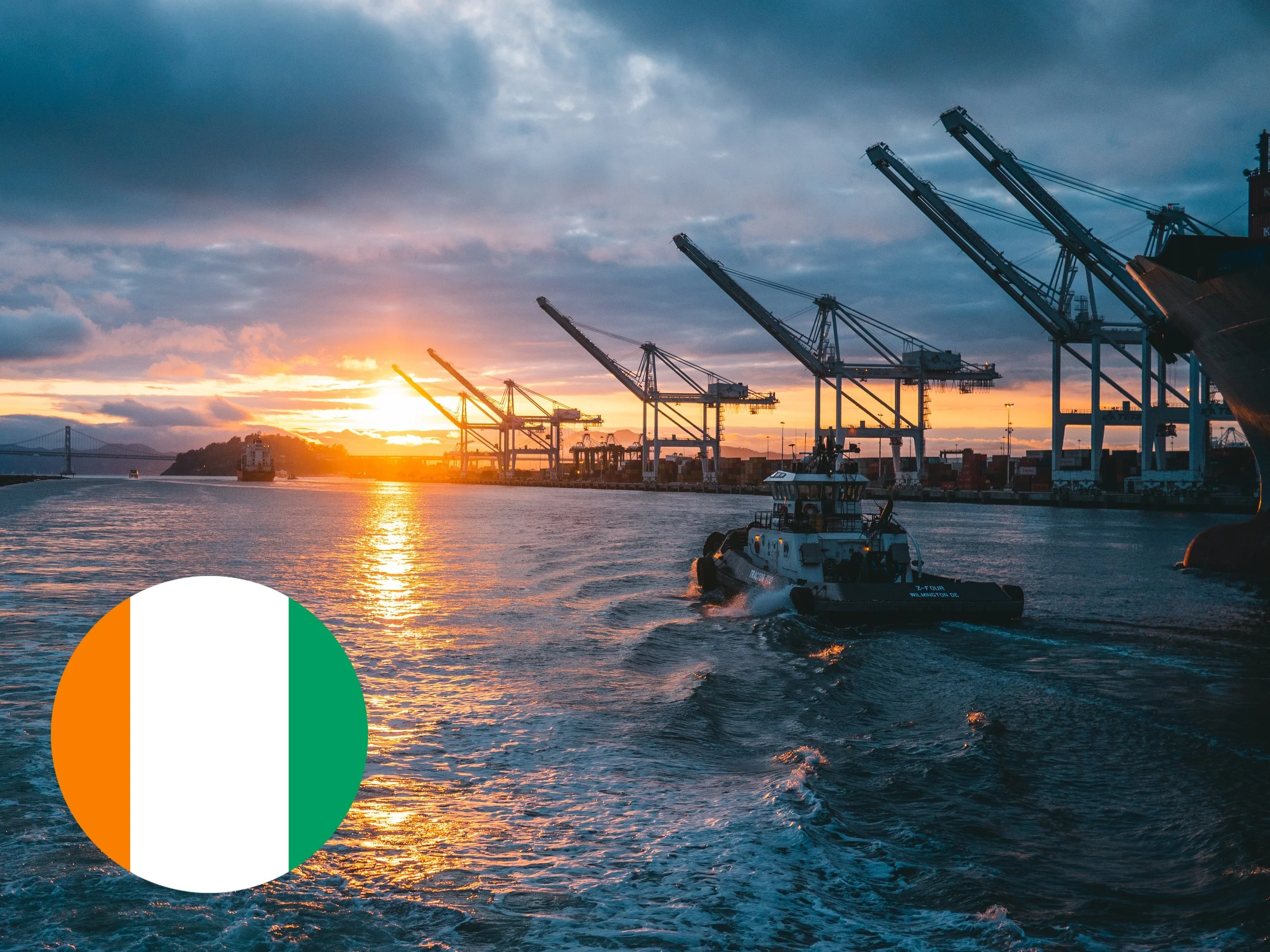
ABIDJAN, Côte d’Ivoire | January 26, 2026 — When Houston-based Murphy disclosed on January 19 that its Civette-1X exploratory well in Block CI-102 had encountered hydrocarbons but not in commercially viable volumes, the headline read like a setback. In exploration terms, it was. Capital was spent, expectations trimmed, timelines nudged. Yet the subtext tells a more durable story about a basin still in the act of proving itself.
Murphy, holding 90 percent alongside state company Petroci’s 10 percent, did not exit or impair the acreage. Instead, it signaled further technical work and evaluation. That posture matters. In frontier deepwater provinces, companies retreat fast when petroleum systems look doubtful. Here, the system worked. The volumes did not.
For Côte d’Ivoire, the distinction is strategic.
A Miss Inside a Momentum Cycle
Civette-1X lands at an awkward but revealing moment. The country is in the middle of an upstream acceleration cycle anchored by Eni’s Baleine complex, the discovery that reintroduced Côte d’Ivoire to serious oil and gas conversations after decades in the shadows of regional giants.
By early 2025, Baleine Phases 1 and 2 had lifted national production beyond earlier expectations, reshaping output curves and government planning. While a Phase 3 final investment decision has not yet been taken, Eni’s agreement to sell a ten-percent stake in the Baleine project to SOCAR, the State Oil Company of Azerbaijan, underscores continued international confidence in the asset and signals portfolio maturation rather than retrenchment.
Against that backdrop of consolidation and strategic partnering around a proven development, Murphy’s well reads less like a warning siren and more like the normal friction of basin maturation. Exploration portfolios are built on asymmetry. A few Baleines fund many Civettes.
Why the Result Still Matters
The Civette outcome does three things for industry watchers.
First, it confirms an active petroleum system in a part of the Ivorian deepwater that remains underdrilled. Hydrocarbons were present. The trap, charge, or reservoir quality simply did not align at commercial scale in this structure. That narrows uncertainty. Future wells will be better informed, not blind.
Second, it underscores the risk discipline shaping IOC behavior in Africa’s current offshore cycle. Companies are probing, but not gambling. The fact that Murphy is staying engaged signals confidence that Block CI-102 and surrounding acreage still hold running room.
Third, it stress tests the government’s narrative. Côte d’Ivoire has been positioning itself as a stable, investor-friendly jurisdiction with competitive fiscal terms and policy continuity under its evolving National Development Plan framework. How a country absorbs a non-commercial well without regulatory friction often speaks louder than how it celebrates a discovery.
So far, the system appears steady.
The Broader Upstream Picture
Beyond Murphy, the chessboard remains active.
Eni’s Calao discovery in 2024 added reserves depth to the national portfolio, reinforcing long-term production pathways. The Italian major also expanded its footprint with a new offshore exploration agreement later in 2025, a signal that Baleine was not a one-off.
Elsewhere, Petrobras publicly circled Ivorian deepwater acreage in 2025 as part of a strategy to make Africa a primary overseas exploration theater. That interest is not casual. Brazilian deepwater expertise maps neatly onto the geology of the Gulf of Guinea’s transform margin plays.
Taken together, these moves suggest companies are reading Côte d’Ivoire less as a speculative outpost and more as an emerging core area within West Africa’s offshore map.
Big Targets, Big Assumptions
Official ambition is not modest. Production is being steered toward 200,000 barrels per day by 2028, with longer-range aspirations multiplying that figure by 2035. Parallel gas expansion is framed as a foundation for power reliability and industrial takeoff. Economic projections linked to the hydrocarbons push point to growth averaging above 7 percent annually by 2030, with the sector’s share of GDP climbing into the mid-teens.
Those numbers rely on execution, timely FIDs, and continued discovery success. They also assume that setbacks like Civette remain isolated rather than systemic.
A Basin Growing Up
In mature provinces, a non-commercial well barely blips the radar. In emerging ones, it can spook sentiment. Côte d’Ivoire now sits between those states. It is no longer an untested idea, but not yet a fully de-risked machine.
Murphy’s Civette-1X is part of that transition. It trimmed optimism at the margin while strengthening the geological case at the core. For investors and policymakers, the message is less about one well and more about portfolio resilience.
The country’s offshore story is no longer a single-discovery tale. It is becoming a basin narrative, with all the statistical wins and losses that entails.
