Egypt Locks In $150m EIB Backing for Africa’s Largest Hybrid Solar Project as Climate Finance Momentum Builds
Egypt is accelerating its clean energy build-out with $150 million in European Investment Bank financing for the Obelisk project, a 1.1 GW solar photovoltaic plant paired with 100 MW / 200 MWh of battery storage, now the largest hybrid solar PV development in Africa. The project, developed by Scatec and co-financed alongside the African Development Bank, EBRD and British International Investment, will sell power to the Egyptian Electricity Transmission Company under a long-term PPA, reinforcing grid stability and energy security. Obelisk sits within a broader financing push that includes €688 million in EIB- and UNDP-backed green bond funding, aligned with Egypt’s National Climate Change Strategy 2050. Together, these initiatives position Egypt at the forefront of Africa’s shift toward utility-scale renewables, blended finance, and system-level climate infrastructure.
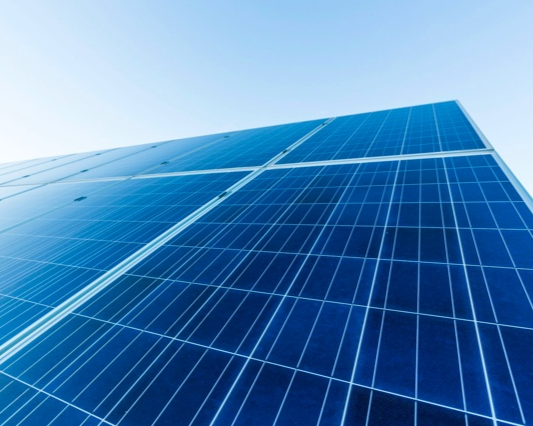
Photo Credit: Scatec
Qena | January 12, 2024 - By the time the European Investment Bank’s delegation reached Qena this week, Egypt’s clean energy story had already widened beyond kilowatts and construction schedules into something more structural: the architecture of climate finance itself.
At the center of the moment sits Obelisk, a 1.1-gigawatt peak solar photovoltaic plant paired with a 100-megawatt, 200-megawatt-hour battery energy storage system. Developed by Scatec and now officially inaugurating its first phase, Obelisk is the largest hybrid solar PV project on the African continent, and one of the most technically ambitious ever undertaken in Egypt’s power sector.
The European Investment Bank, through its development arm EIB Global, announced $150 million in financing for the project, underscoring Europe’s role as a cornerstone financier in Egypt’s energy transition. Electricity from the plant will be sold under a long-term power purchase agreement to the Egyptian Electricity Transmission Company, anchoring the project firmly within the country’s national grid and energy security strategy.
The inauguration drew a full spectrum of institutional weight: Prime Minister Mostafa Madbouly, senior ministers responsible for electricity, planning and industrial development, EU Ambassador Angelina Eichhorst, EIB Global Director General Andrew McDowell, and Scatec CEO Terje Pilskog. Their presence reflected not only the scale of the project but its symbolic value as Egypt pushes to raise renewables to 42 percent of electricity generation by 2030.
“This landmark project demonstrates how strategic European financing can accelerate Egypt’s clean energy ambitions while strengthening energy security and economic resilience,” said EIB Vice-President Gelsomina Vigliotti, framing Obelisk as a bridge between climate goals and large-scale infrastructure delivery under the EU’s Global Gateway and the EU-Egypt Strategic Partnership.
The financing structure itself reads like a map of multilateral coordination. Alongside the EIB, the African Development Bank is co-financing the project, while the European Bank for Reconstruction and Development and British International Investment are participating under a Team Europe approach. Grants, concessional financing, and an EU NDICI guarantee complete the package, reducing risk and crowding in long-term capital.
For Scatec, which has emerged as one of the most active independent power producers in Africa, the project marks a step change in hybrid renewable deployment. “Their support is instrumental in driving forward this landmark initiative,” Pilskog said of the EIB, pointing to Obelisk’s role in strengthening Egypt’s renewable energy future while introducing grid-scale storage at unprecedented scale.
Yet Obelisk is only one strand in a broader financing weave now taking shape. In early January 2026, Egypt announced it had successfully mobilized €688 million in green bond financing under the Global Green Bond Initiative, backed by the EIB and the United Nations Development Programme. The funds, secured by the Ministry of Environment in its role as national authority for the Green Climate Fund, are aligned with Egypt’s National Climate Change Strategy 2050.
Authorities expect the green bond programme to support large-scale climate adaptation and mitigation measures nationwide, with projected emissions reductions of up to 10 million tonnes of CO₂ equivalent and resilience benefits reaching roughly 8.3 million people. While project-level allocations have yet to be disclosed, the initiative represents one of the largest climate-linked financing mobilisations by an African country to date.
Together, the Obelisk financing and the green bond mobilisation signal a shift in emphasis from pilot projects to systems. Egypt is pairing utility-scale renewable infrastructure with reforms to its climate finance ecosystem, including the development of digital monitoring, reporting and verification systems with international partners and the establishment of climate change units across 18 ministries.
“The inauguration of Obelisk’s first phase shows what can be achieved when strong national ambition is matched with reliable long-term financing,” said EIB Global’s Andrew McDowell, describing the project as a translation of climate commitments into concrete infrastructure that builds local capacity while accelerating the energy transition.
For the European Union, the alignment is equally strategic. Obelisk supports REPowerEU priorities, advances Global Gateway objectives, and reinforces Europe’s position as a long-term partner in the Southern Neighbourhood. As Ambassador Eichhorst put it, the project exemplifies how clean energy, skilled jobs and climate action can move together when financing, policy and execution converge.
In Qena’s desert light, the panels now rising are more than hardware. They are the visible edge of a deeper financial re-engineering, one that suggests Egypt’s energy transition is no longer just about adding megawatts, but about building the capital pathways to sustain them.
